Joshua Farley

Fellow, Ecological Economics

Economics

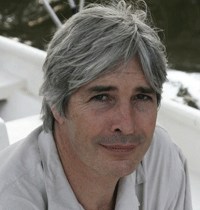
Joshua Farley is a renowned ecological economist working to integrate social, human, and natural capital into the way the world views economics. He is a Fellow of the Gund Institute for Ecological Economics and a Professor in the Community Development and Applied Economics faculty at the University of Vermont. With economist Herman Daly, Joshua co-authored the foundation textbook Ecological Economics: Principles and Applications; he also co-authored Restoring Natural Capital: Financing and Valuation. Joshua has received several Fellowships and has spent considerable time abroad, including several years teaching ecological economics at the School for Field Studies Centre for Rainforest Studies (CRS) in Far North Queensland Australia.

videos

We're All in This Together: Farley on Vermont healthcare reform

length: 28:51   credit: Vermont Channel 17

Is Vermont moving too fast with health care reform? Dr. Betty Keller, MD, of St. Johnsbury, VT interviews UVM Ecological Economics professor Dr. Joshua Farley, PhD, and his father, Dr. Eugene Farley, MD, Professor Emeritus in Family Medicine at the University of Wisconsin, about Vermont's new health care bill, Act 48. The nation is watching Vermont as our state attempts to improve access, improve outcomes, and reduce cost through a universal, unified health care system. Dr. Eugene Farley provides historical context and professional context, as a physician who started practicing before we had Medicare and before Family Practice was founded, when access was already challenging but costs were not so high. Dr. Joshua Farley speaks about rationing, waiting times, and lack of choice of provider in America now.

audio

Reality Report: Ecological Economics

length: 52:13   credit: Reality Reportdownload

In this edition of the Reality Report, economics Professor Joshua Farley of the Gund Institute for Ecological Economics at the University of Vermont discusses the false assumptions of dominant economic theory, why this leads to problems, and what an alternative economic system might look like. During the interview, Prof. Farley explains how policies to protect the environment, stem the loss of biodiversity, conserve fossil fuels, and deal with climate change will fail without economic reform that first sets the sustainable scale of the human economy, secondly decides what is a just distribution, and finally allows the market to find the most efficient allocation.

Latest Publications

Economic Solutions Worth Spreading

Joshua Farley    Oct 21, 2011   

On October 24th the Gund Insititute for Ecological Economics is holding a teach in which aims to respond to the recent #Occupy protests on Wall Street and around the country. The event has been driven by the efforts of the … >>

Rethinking GNP: From welfare to cost

Joshua Farley    Oct 26, 2011   

[Excerpt]: Aside from the nation of Bhutan, which strives to maximise Gross National Happiness, virtually all countries in the world single-mindedly pursue endless increases in Gross National Product (GNP), which measures … >>

ECONOMY: Ecological Economics

Joshua Farley    Dec 08, 2011   

EXCERPT:  Many people would agree that the central desirable end of economic activity is a high quality of life for this and future generations.  Conventional economists argue that humans are insatiable, and … >>

The Post Carbon Reader

Joshua Farley

How do population, water, energy, food, and climate issues impact one another? What can we do to address one problem without making the others worse? The Post Carbon Reader features essays by some of the world’s most … >>

press coverage

Farley in article on ecological solutions in Ecuador

Joshua Farley  

Post Carbon Fellow Joshua Farley's work on Brazilian ecosystems is referenced in this article at the University of Vermont website. From the article: Following a two-week, UVM travel study course "The Politics of Land … >>