- Fellow Emeritus
- Fellows Emeriti, Speakers
- http://www.commoncurrent.com/
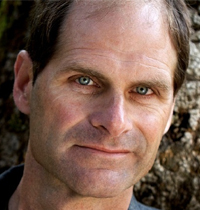
Warren Karlenzig, President of Common Current, has developed sustainable development strategy, policy and metrics on a global basis with national leadership (China, Japan, the United States, Korea), the State of California, major cities, corporations (Autodesk, SOM, IDEO, NRG), foundations and international non-governmental organizations. Clients have included the United Nations Department of Economic and Social Affairs; United Nations Centre For Regional Development; the World Bank; US Department of State; the White House Office of Science and Technology; US EPA Futures Group; Lawrence Berkeley National Laboratory; Beijing Dept. of External Affairs; Guangzhou Planning Agency; the Asian Institute for Energy, Environment & Sustainability; and The David and Lucile Packard Foundation. He helped co-coordinate the “Economy and Economic Development” section of the San Francisco Sustainability Plan (1996-1997: formally adopted 1998) and wrote the original language for the San Francisco’s Municipal Green Building Ordinance (1998 and 2003), among the first of its kind. He is recognized as one of the world’s top experts on urban sustainability planning strategy and metrics, and is the co-author of the United Nations’ Shanghai Manual: A Guide for Sustainable Urban Development in the 21st Century (2012, in English and Mandarin) and author of How Green is Your City? The SustainLane US City Rankings (New Society Publishers, 2007) as well as Blueprint for Greening Affordable Housing (Global Green USA, 1999).
Warren is on the board of directors for the Climate Change Center and the Korea Green Foundation, and has lectured or provided talks in three continents including EU Parliament in Brussels, Stanford University and China’s Zhongnanhai, and has appeared in global media including The Washington Post, The Wall Street Journal, The New York Times, People’s Daily (China), Fortune, Forbes, BBC, CNN and CNBC.
Articles / Blog posts
Reports
-
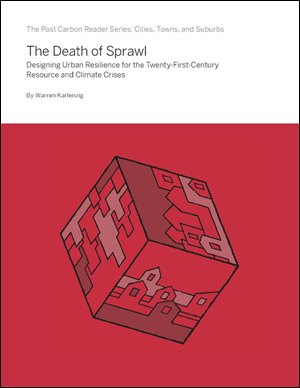
The Death of Sprawl
June 23, 2010